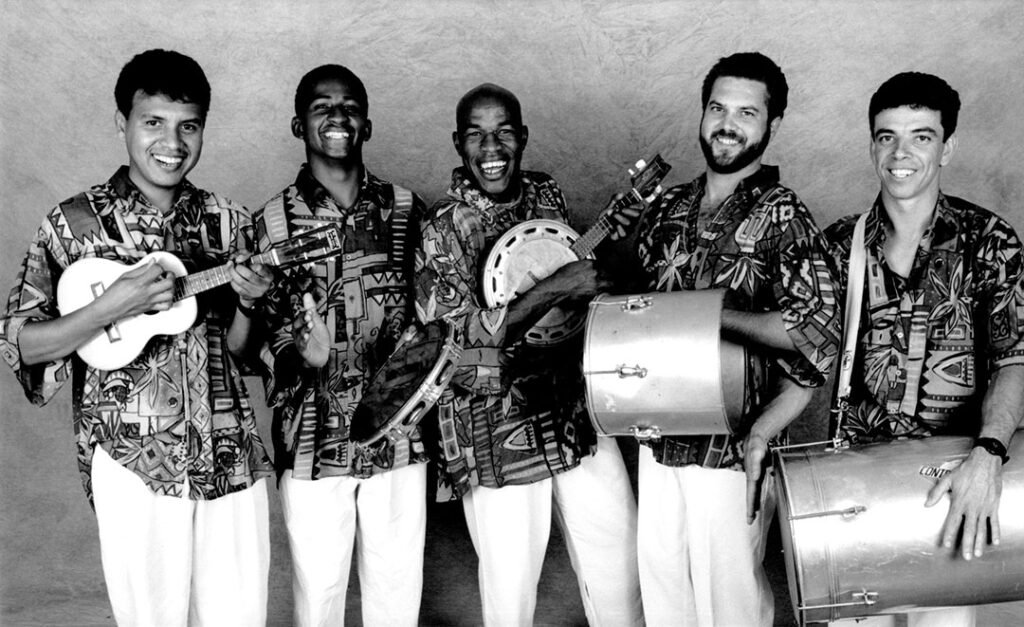
Samba is a distinguished musical genre, while pagode refers to the social setting where individuals gather to appreciate this art form, fostering a deep connection between performers and audience members, as everyone participates in the singing. A key distinction of pagode compared to traditional roda de samba is the adaptation of instruments for musicians seated around a table. This innovation can be attributed to the influential group “Fundo de Quintal” based in Rio de Janeiro
In this class, you will have the opportunity to explore various musical instruments typically used in samba, as well as learn the most popular songs currently being played in Brazil, alongside some more traditional pieces. The choice of which instruments or songs to focus on is entirely yours.
Percussion
Brazilian percussion can be regarded as a form of world percussion. This perspective stems from the fact that Brazilian percussion has been shaped by a multitude of regions and countries. Each region of Brazil possesses its own distinctive rhythms. Additionally, musicians who tour internationally often return with new influences. To facilitate understanding, we can categorize these by instrumentation, such as traditional hand drums, congas, tamborins, pandeiros, and bongos, which are integral to African Brazilian religious practices and samba de roda, as well as the musical instruments employed in parades like Samba enredo, timbalada, and samba reggae.
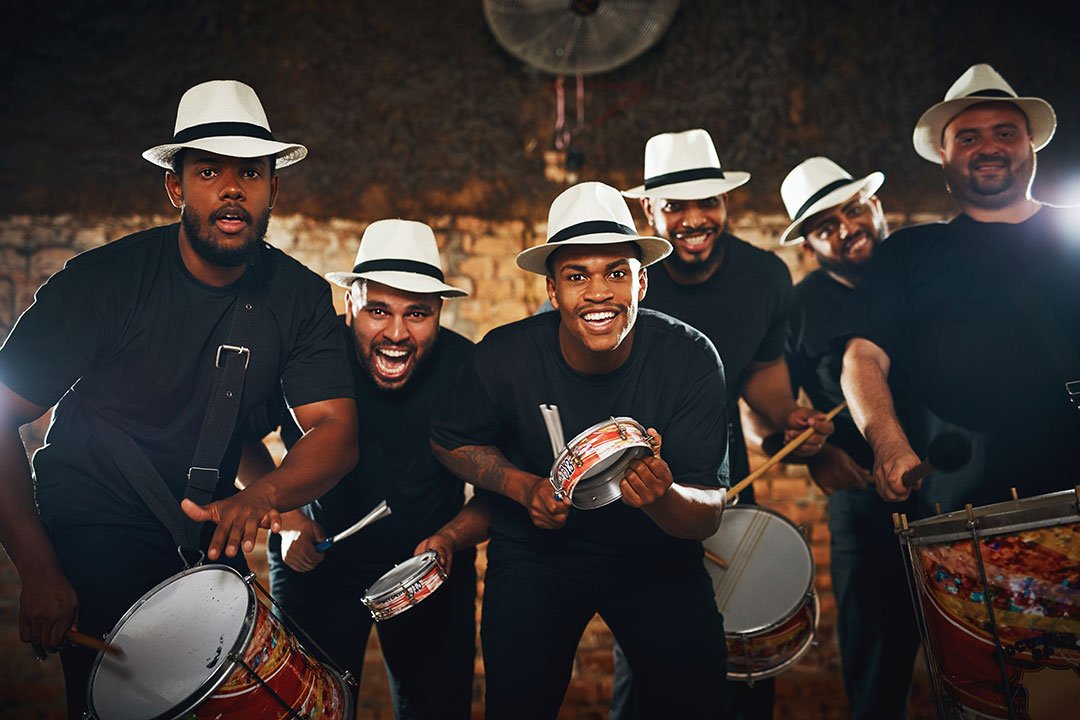
In this class, you will gain a comprehensive understanding of rhythm fundamentals, along with essential techniques for application. Subsequently, you will be introduced to a diverse array of percussion instruments. At this juncture, you may find yourself drawn to one or more specific instruments, allowing you the opportunity to delve deeper into your preferred choice while still covering a broad range of instruments throughout the curriculum.
Afro-Brazilian Percussion
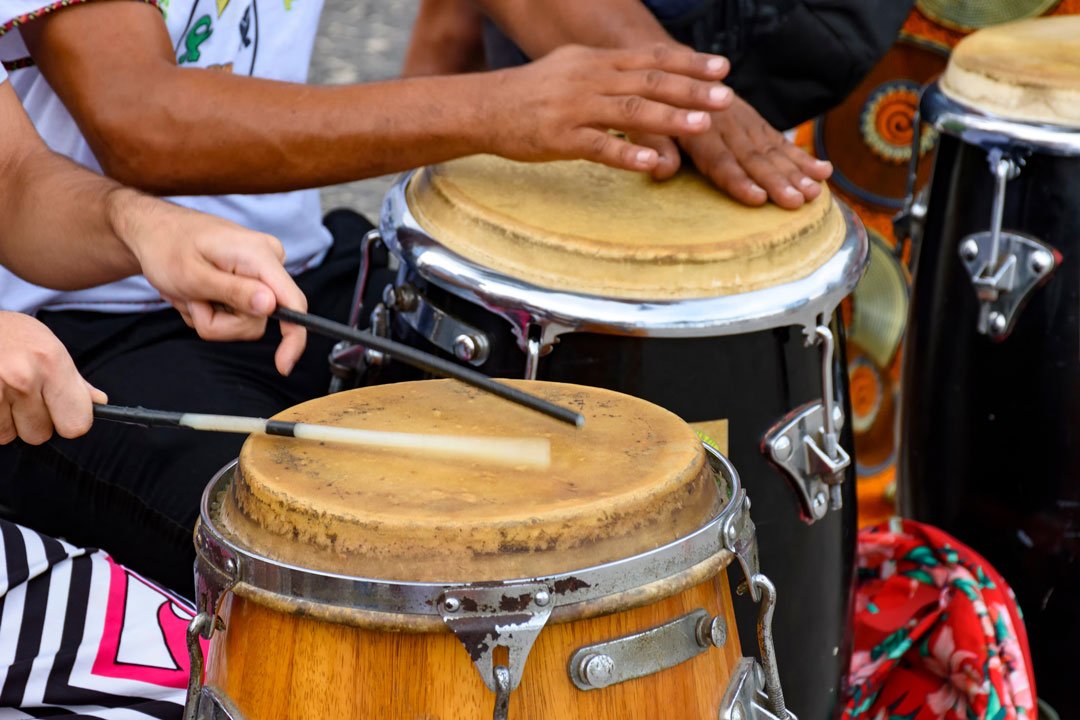
The influence of African rhythms on Brazilian music is quite significant. Much of this influence came through religious practices, as well as traditional and recreational events. The primary musical instrument used is the atabaque, commonly known as the conga. In the Afro-Brazilian religion of Candomblé, the atabaque has three different sizes: Le, Rumpi, and Rum, similar to the Afro-Cuban versions known as quinto, conga, and tumba. There is an enormous variety of rhythms, and in this class, you will learn about some of them. These rhythms have a profound impact on music around the world.